
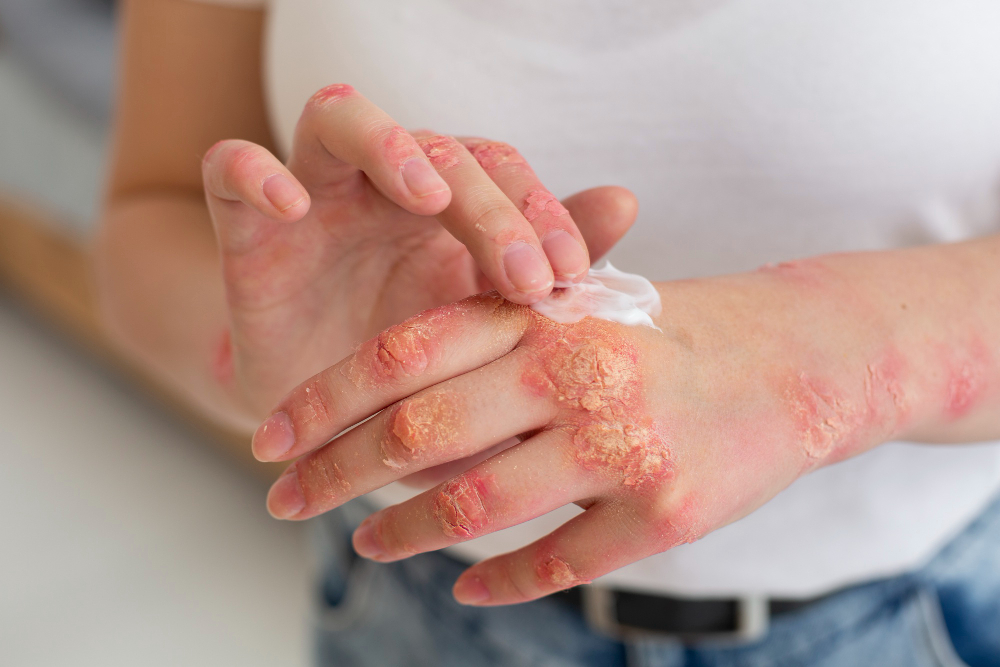
What Is Contact Dermatitis?
Contact dermatitis is a skin allergy that happens when your skin touches certain products or substances. This condition can cause redness, itching, and even blisters. Often, people develop contact dermatitis after using soaps, lotions, or cleaning products. According to the CDC, contact dermatitis is one of the most common skin problems. Because it can look like other rashes, it is important to know what sets it apart.
Common Symptoms of Contact Dermatitis
Usually, symptoms appear soon after your skin touches the trigger. However, sometimes it may take a few hours or days. For example, you might notice:
In some cases, the rash can spread if you keep touching the trigger. But the rash itself is not contagious.
Everyday Products That Can Trigger Skin Allergy
Many people are surprised by how many common items can cause a skin allergy from products. For instance, you may react to:
Because these items are used daily, it is easy to overlook them as possible causes.
Causes and Risk Factors
There are two main types of contact dermatitis. First, irritant contact dermatitis happens when a substance damages your skin. Second, allergic contact dermatitis occurs when your immune system reacts to a trigger. For example, some people are more likely to get contact dermatitis if they have:
Additionally, children and older adults may have higher risk due to thinner skin.
How Contact Dermatitis Is Diagnosed
Doctors usually diagnose contact dermatitis by looking at your skin and asking about your daily habits. Sometimes, they may use patch testing. In this test, small amounts of possible triggers are placed on your skin. After a few days, your doctor checks for a reaction. Because other skin problems can look similar, seeing a healthcare provider is important for the right diagnosis.
Treatment Options for Contact Dermatitis
Once the trigger is found, the best step is to avoid it. However, if you already have a rash, treatment can help. For mild cases, you might use:
For severe or long-lasting rashes, your doctor may prescribe stronger creams or pills. In rare cases, antibiotics are needed if the skin becomes infected. Always follow your doctor’s advice for the safest care.
Tips for Preventing Contact Dermatitis
Prevention is key for dermatitis. Therefore, try these dermatitis prevention tips:
Because triggers can be hidden, always check product labels for common allergens.
Lifestyle Guidance for Managing Skin Allergies
Living with contact dermatitis can be easier with a few lifestyle changes. For example, keep your skin clean and dry. Additionally, use gentle soaps and lukewarm water. If you notice a new rash, stop using any new products right away. It also helps to wear loose, soft clothing to avoid rubbing the skin. Because stress can make symptoms worse, try to manage stress with relaxation techniques. If you have frequent flare-ups, consider keeping a diary to track possible triggers. This way, you can share helpful details with your doctor.