
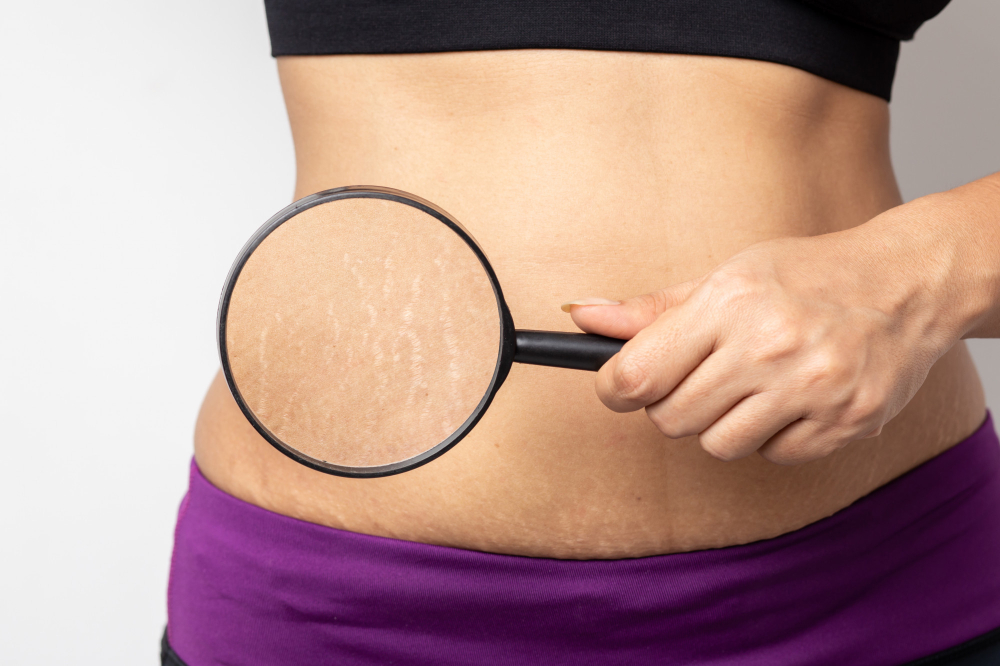
What Are Stretch Marks?
Stretch marks are lines or streaks that appear on the skin. They often look pink, red, purple, or white. Many people notice stretch marks on their belly, hips, thighs, or arms. These marks can show up when the skin stretches quickly. For example, this may happen during pregnancy or rapid weight gain. While stretch marks are not harmful, they can affect how you feel about your skin. Because they are common, many people look for stretch marks treatment options to improve their appearance.
Common Symptoms of Stretch Marks
Usually, stretch marks start as colored streaks on the skin. Over time, they may fade and become lighter. However, they do not disappear completely. You may notice:
Sometimes, stretch marks can feel sore or tender. But most often, they cause no pain. Still, their appearance can cause stress for some people.
Causes and Risk Factors
Stretch marks causes include anything that makes the skin stretch quickly. For instance, rapid growth or weight changes can lead to these marks. In addition, certain risk factors make some people more likely to get stretch marks. These include:
Because skin type and genetics play a role, not everyone develops stretch marks. However, knowing the causes can help you understand your own risk.
How Stretch Marks Are Diagnosed
Doctors usually diagnose stretch marks by looking at your skin. In most cases, no special tests are needed. However, your doctor may ask about your medical history. For example, they might ask about rapid weight changes or medicine use. Sometimes, if a medical condition is suspected, your doctor may order blood tests. Still, most people do not need extra testing for stretch marks.
Effective Treatments for Stretch Marks
Many people want to know how to treat stretch marks. While no treatment removes them completely, some options can make them less visible. According to dermatology experts and the American Academy of Dermatology, these treatments may help:
Because results vary, it is best to talk with a dermatologist. Early treatment often works better than waiting until marks are older.
Lifestyle Tips for Managing Stretch Marks
Even though stretch marks are common, you can take steps to care for your skin. For example, keeping your skin moisturized may help it feel softer. In addition, gentle massage with creams or oils can improve comfort. Here are some helpful tips:
Because healthy skin is more resilient, these habits may help your skin look and feel better.
Prevention Strategies
Although you cannot always prevent stretch marks, some steps may lower your risk. For instance, gaining weight slowly during pregnancy or growth can help. In addition, you can try these prevention tips:
Because genetics also play a role, not all stretch marks can be prevented. However, these steps may help reduce your chances of getting new marks. Consult Dr. Mandar Mane for removal of strech marks.