
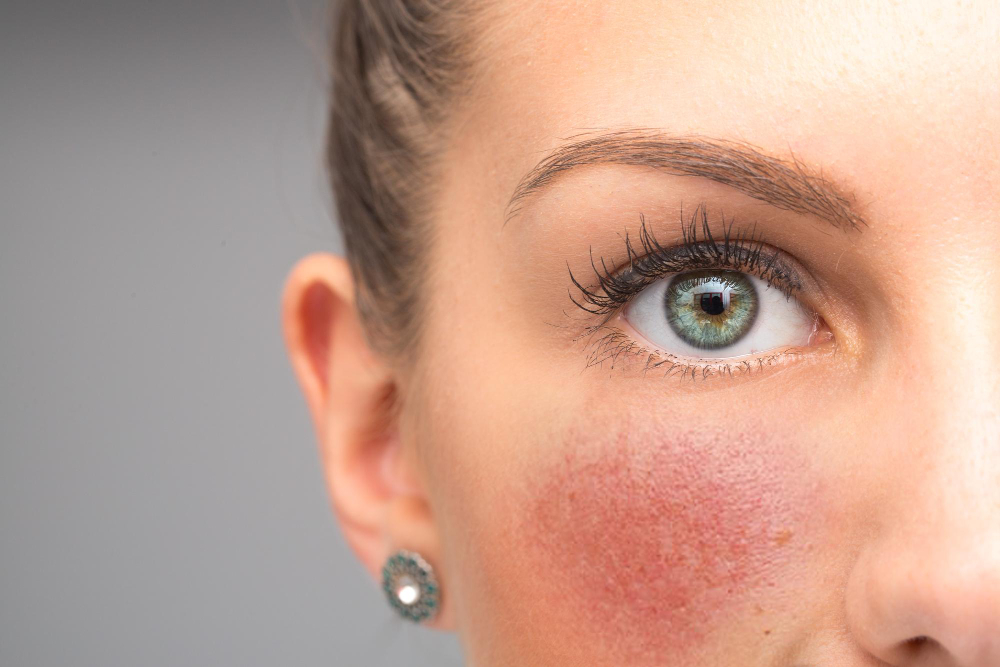
What is Rosacea?
Many people notice facial redness that never goes away. This condition is called rosacea. Rosacea is a common skin problem. It causes redness, visible blood vessels, and sometimes small bumps on the face. Often, the cheeks, nose, chin, and forehead are affected. Although anyone can get rosacea, it is more common in adults over 30. For some, the redness may come and go. However, for others, it stays and can get worse over time. Because of this, early care is important. According to the American Academy of Dermatology, rosacea is not contagious.
Common Symptoms of Rosacea
Rosacea has several signs. While symptoms can vary, most people notice:
Sometimes, symptoms get worse after eating spicy foods, drinking hot drinks, or being in the sun. For many, these triggers make the redness more noticeable.
Causes and Risk Factors
Doctors do not know the exact cause of rosacea. However, several factors may play a role. For example, genetics can increase your risk. If someone in your family has rosacea, you may be more likely to get it. Other possible causes include problems with blood vessels, immune system reactions, and skin mites called Demodex. In addition, certain things can trigger or worsen rosacea. These include:
Women and people with fair skin are more likely to develop rosacea. Still, anyone can have it.
How Rosacea is Diagnosed
Doctors diagnose rosacea by looking at your skin and asking about your symptoms. There is no special test for rosacea. Instead, a dermatologist will check for signs like persistent facial redness and bumps. Sometimes, they may ask about your family history. In rare cases, they may do tests to rule out other skin problems. Because rosacea can look like acne or allergies, seeing a dermatologist for facial redness is important. Early diagnosis helps prevent the condition from getting worse.
Effective Treatment Options
While there is no cure for rosacea, many rosacea treatment options can help control symptoms. Treatment depends on how severe your symptoms are. Common treatments include:
In addition, your doctor may suggest gentle skin care products. For best results, follow your treatment plan closely. If you live in a city with many dermatologists, you can find local care for persistent facial redness.
Lifestyle Tips for Managing Rosacea
Managing rosacea at home can make a big difference. Here are some tips to help:
Because triggers vary, it helps to notice what makes your symptoms worse. Over time, you can avoid these triggers and keep your skin calm.
Prevention and When to See a Dermatologist
Although you cannot always prevent rosacea, you can lower your risk of flare-ups. For example, protect your skin from the sun and avoid known triggers. If you notice persistent facial redness or other symptoms, see a dermatologist for facial redness. Early care can prevent rosacea from getting worse. In summary, if your redness does not go away, or if you have pain or eye problems, seek medical advice right away.
If you notice persistent facial redness, consult a dermatologist Dr. Mandar Mane for personalized advice. Early treatment can help you manage rosacea and improve your quality of life.