
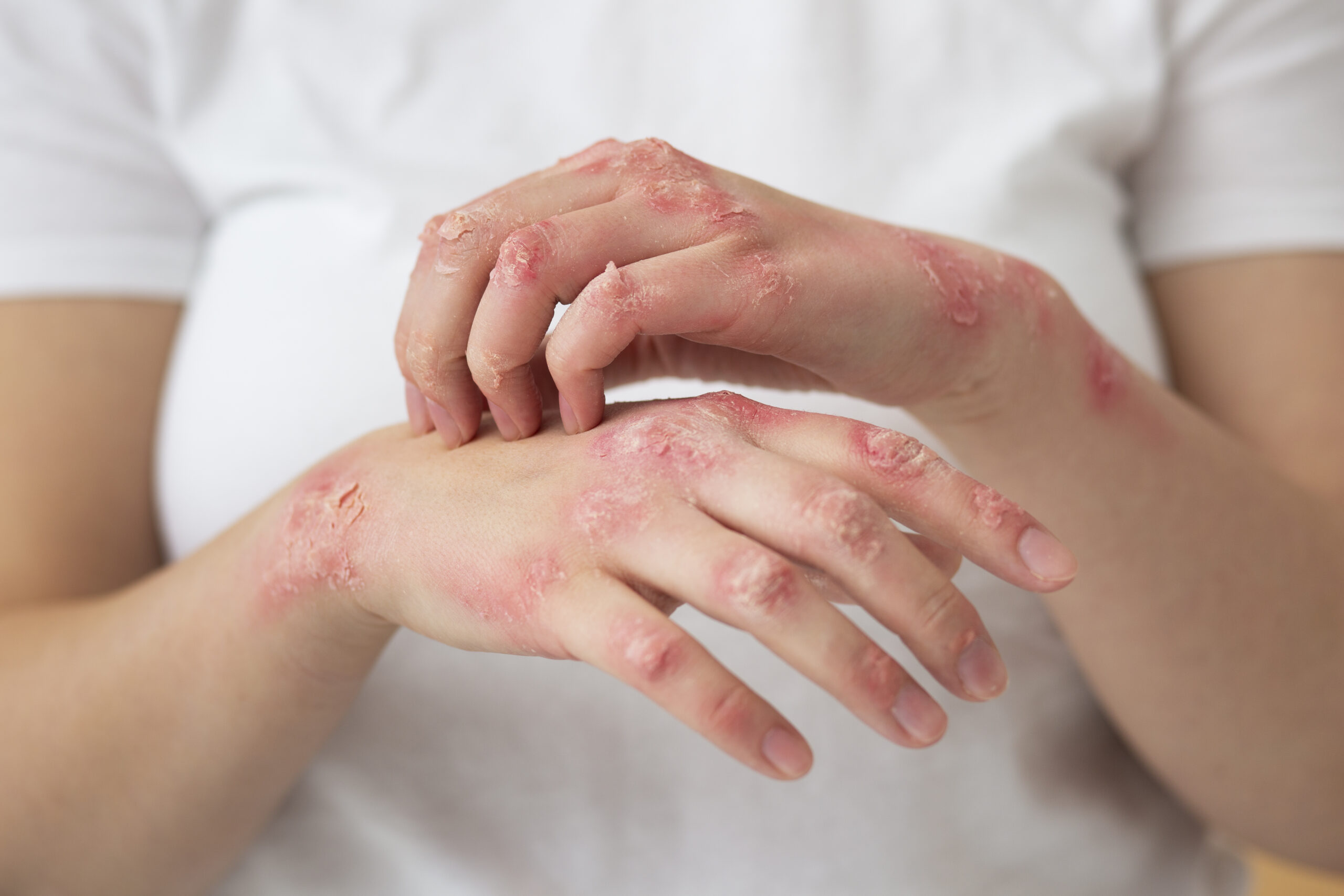
Introduction to Psoriasis
Psoriasis is a long-lasting skin condition that affects millions of people worldwide. In fact, it causes red, scaly patches to appear on the skin. While it is not contagious, psoriasis can be uncomfortable and sometimes painful. Many people want to know more about psoriasis symptoms, causes, and treatment options. Understanding this condition can help you manage it better. According to the World Health Organization (WHO), psoriasis affects about 2-3% of the global population.
Symptoms of Psoriasis
Psoriasis symptoms can vary from person to person. However, some signs are common. Early detection can help you seek treatment sooner. Here are the most common symptoms:
Sometimes, symptoms can flare up and then improve. For example, stress or cold weather may make symptoms worse. On the other hand, sunlight can help some people feel better.
Causes and Risk Factors
Doctors do not know the exact cause of psoriasis. However, it is linked to the immune system. In psoriasis, the immune system attacks healthy skin cells by mistake. This causes skin cells to grow too quickly. As a result, thick patches form on the skin.
Several factors can increase your risk of developing psoriasis:
Although anyone can get psoriasis, it often starts between ages 15 and 35. Both men and women are affected equally.
Diagnosis Methods
Doctors usually diagnose psoriasis by looking at your skin. Sometimes, they may ask about your medical history. In some cases, a small skin sample (biopsy) is taken. This helps rule out other skin problems. Most of the time, no special tests are needed. If you have joint pain, your doctor may check for psoriatic arthritis, a related condition.
Treatment Options
There are several psoriasis treatment options available. The right treatment depends on how severe your symptoms are. Your doctor will help you choose the best plan. Common treatments include:
Sometimes, a combination of treatments works best. However, all treatments should be used under a doctor’s care. According to the Centers for Disease Control and Prevention (CDC), early treatment can help prevent complications.
Lifestyle Tips for Managing Psoriasis
Managing psoriasis at home can make a big difference. While treatment is important, daily habits also play a role. Here are some helpful tips:
Additionally, regular exercise can help improve your overall health. If you notice new symptoms, let your doctor know right away.
Prevention and When to See a Doctor
Although you cannot always prevent psoriasis, you can lower your risk of flare-ups. For example, avoid known triggers and take care of your skin. If you have a family history of psoriasis, talk to your doctor about ways to reduce your risk.
See a doctor if you notice any of these signs:
Early diagnosis and treatment can help you manage psoriasis more effectively. Remember, everyone’s experience is different. Therefore, it is important to get advice that fits your needs.
Consult Mandar Mane at Manasvi clinics for personalized advice on psoriasis management.